Rainy winters are hard on fence posts, and the material, size and setting of each post decide how long a fence stands.

For steel vs wood fence posts in Clark County, WA, steel under a wood fence makes sense on a wet lot. Steel doesn't rot, though its zinc coating still wears away where it meets the soil. The right post depends on how your yard drains, what fence it carries and how it's set.
Three causes show up most in failed fence posts: concrete finished below ground, undersized posts and cheap materials. Gene and his crew see these most often on local jobs.
Fence post rot does its worst at the ground line. Wood that isn't rot-resistant decays fastest there, where soil moisture and air both reach it (Lebow and White, USDA Forest Products Laboratory, 2007).
They build against all three. On a Terek Fencing job:
Metal vs wood fence posts fail in different ways. Wood rots at the soil line. Galvanized steel fails when its zinc coating wears away underground and the steel starts to rust.
Sources: American Galvanizers Association, 2011; Lebow and White, USDA Forest Products Laboratory, 2007.
Vancouver gets most of its rain from October through March (NOAA NCEI 1991 to 2020 normals, Vancouver Pearson Airport):
Where the soil holds water, as a lot of Clark County's does, that rain stays against the posts.
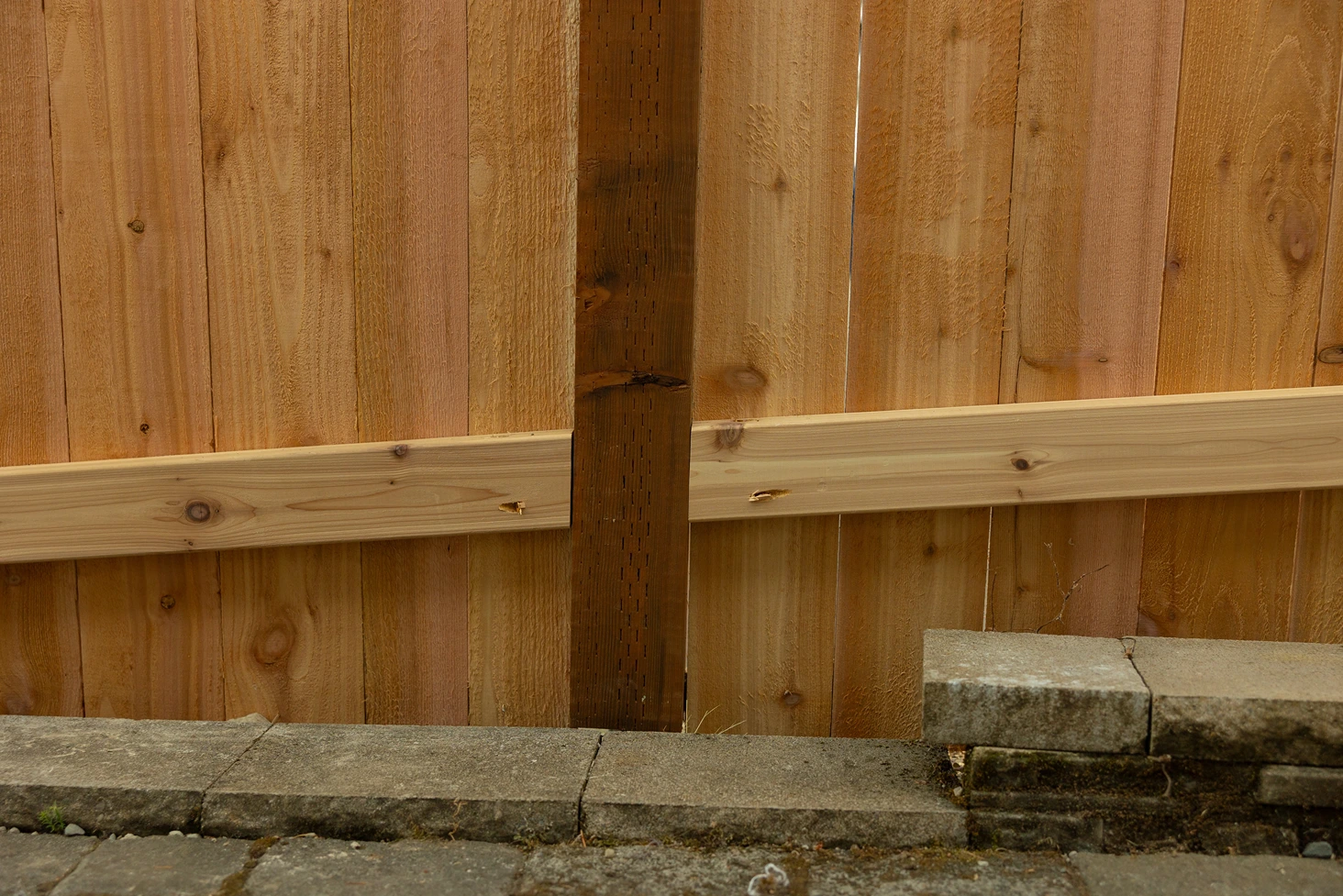
A post's life depends on what it's made of and how wet its ground stays. Wood fails when it rots, and galvanized steel fails once its zinc wears away.
A wood post lasts as long as it can hold off rot. Moisture, air and temperature govern how fast decay fungi work, and at the ground line, a post in Vancouver's wet soil gets both moisture and air (Lebow and White, 2007).
PostMaster posts and the pipe under a post on pipe are galvanized, so a zinc coating protects the steel from rust (AGA, 2012). The zinc works two ways: it shields the steel, and it corrodes first in the steel's place, so the steel underneath stays sound until the zinc is used up.
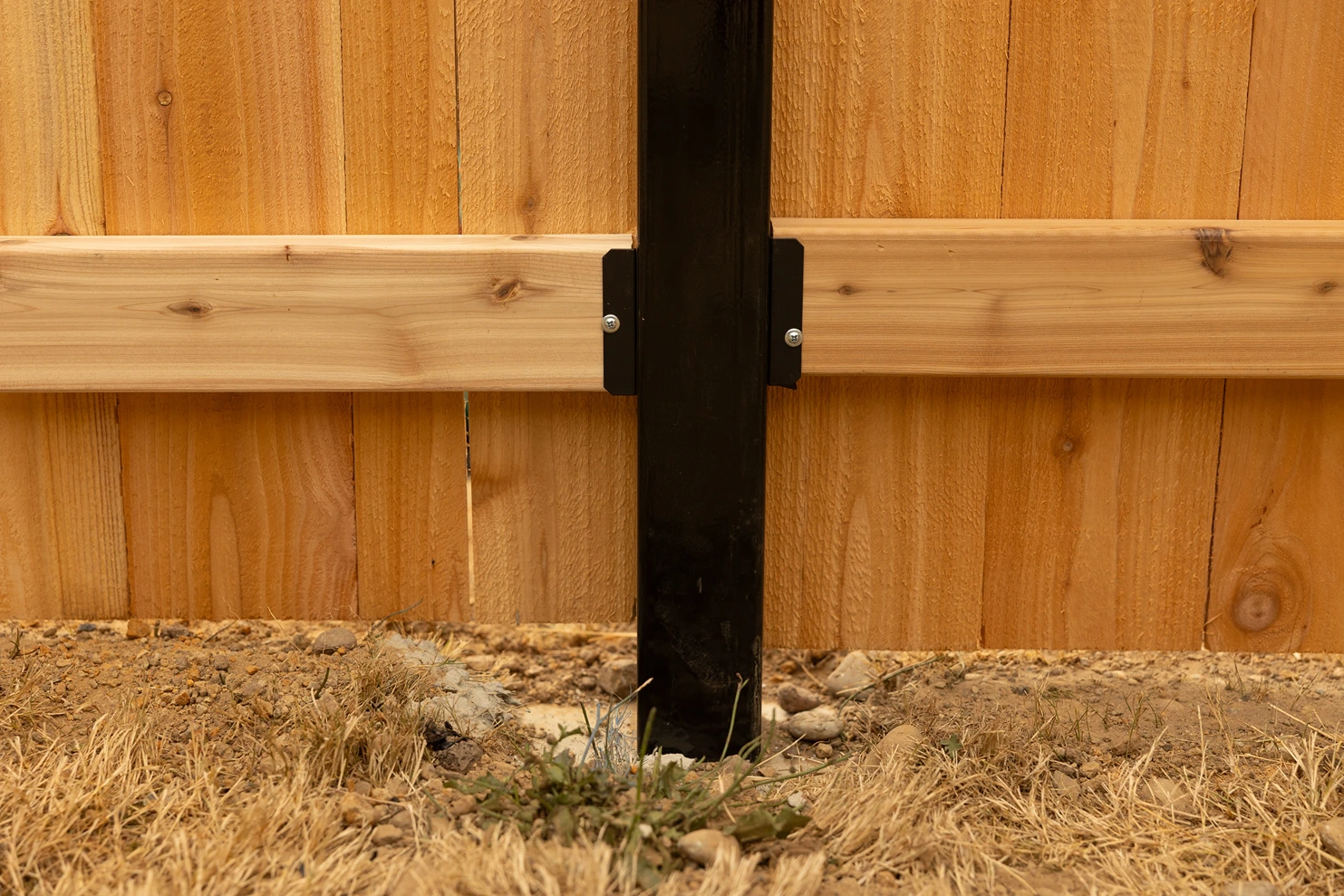
A steel post under a wood fence suits a lot that stays wet through Vancouver's October-to-March rains, because steel can't rot in the ground. Three types of metal fence posts for wood fences keep the wood out of the soil:
The boards and rails stay wood. PostMaster posts are shaped to hide behind them.
Steel posts still sit in wet soil, so the zinc coating matters. ASTM F1043, the industry standard for steel fence frames, covers wood fences as well as chain link.
PostMaster fence posts are galvanized steel posts that Master Halco makes for wood fences. Master Halco says the steel won't rot, twist or warp, and that it's easier to hide than a standard post and bracket setup (Master Halco product data). Its spec (section 32 31 29) lists:
A fence post on pipe is a wood post fastened to a galvanized steel pipe set in the ground. Through Vancouver's wet October-to-March months, the pipe takes the ground contact while the wood post stays above the soil, so the fence still shows wood posts above ground.
When setting fence posts in concrete, Gene and his crew use a fast-setting mix and a beveled top, so the concrete doesn't finish below ground. Their method:
Call 811 first. Under Washington's rules, whoever does the digging makes the request (RCW 19.122.020 and 19.122.030):
Confirm current rules with the Washington Utilities and Transportation Commission.
Check permits.
Confirm current rules with the City of Vancouver or your city's permit office.
Steel posts suit a poorly drained lot, and treated wood suits a well-drained one.
If you're weighing steel vs wood fence posts for your yard, Gene and his crew can walk the lot and recommend the right posts. Terek Fencing's fencing services lead with wood and chain link, including steel posts under wood fences.
Every install carries a 2-Year Workmanship Warranty that covers rechecking shifted posts, adjusting sagging gates and replacing loose fasteners. If an existing fence already has rotted or leaning posts, the crew handles repairs too. Contact Terek Fencing for a free on-site estimate.
On a wet lot, yes: steel posts avoid the rot that ends wood posts at the ground line. How long a steel post lasts then depends on its zinc coating and how wet and acidic the soil is.
Yes. The posts change to steel, and the boards and rails stay wood. PostMaster posts are made for wood fences, and posts on pipe keep a wood post above the soil.
Not with PostMaster posts, which Master Halco makes to hide behind the boards and rails. With a post on pipe, the steel pipe is in the ground and the post you see is wood.
Gene and his crew set fence posts 2 feet deep in fast-setting concrete on local jobs. Whoever digs must call 811 at least 2 business days ahead, as Washington law requires.
Yes, as long as the concrete sheds water. Concrete finished below ground is a common cause of failed posts, so give it a sloped top that carries rain away.
A wood post lasts until rot at the ground line weakens it, so its treatment, its size, how it's set and how wet the ground stays decide how long that takes. Galvanized steel lasts until its zinc wears through, and that happens faster in wet, acidic soil.
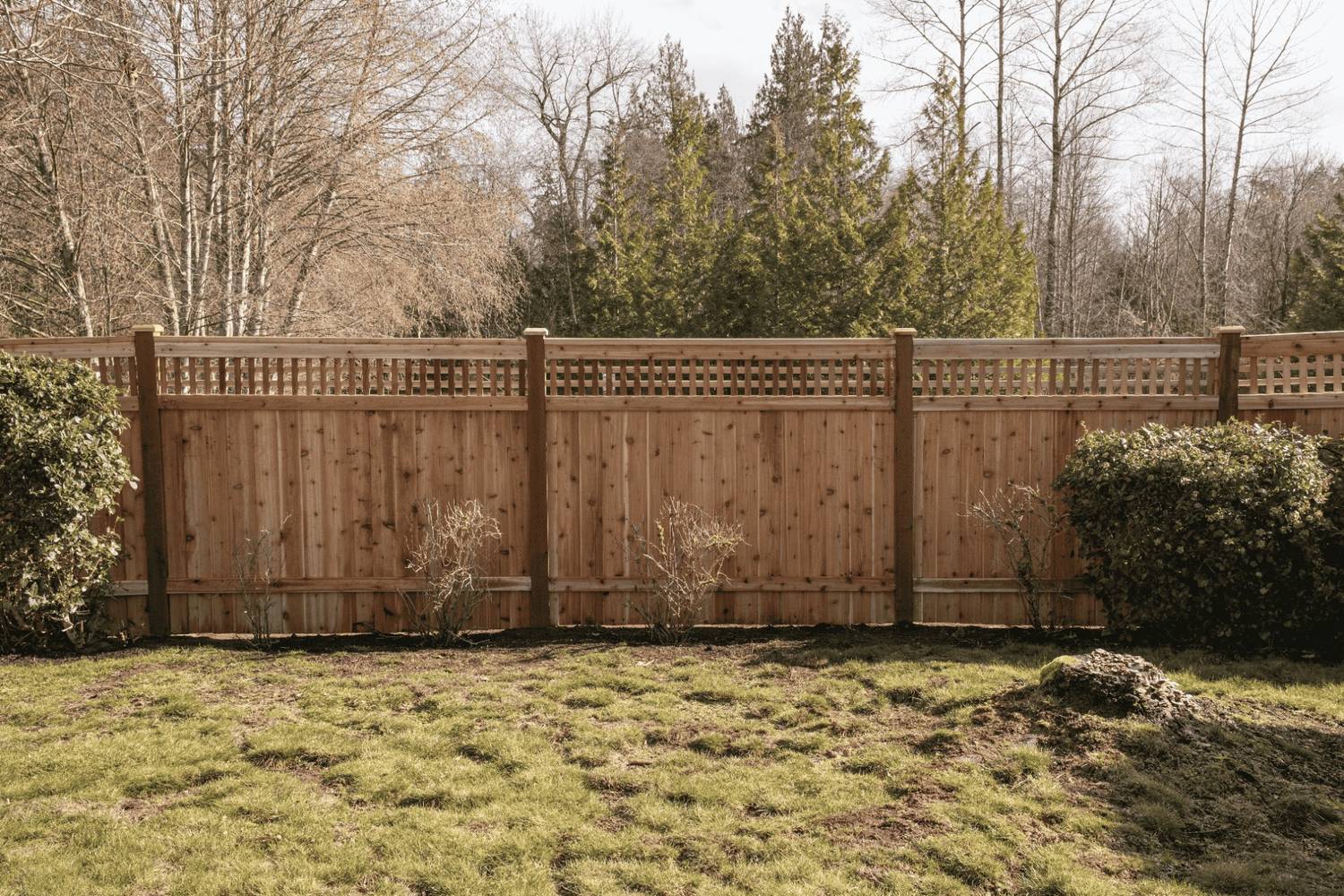

Vancouver's family-owned fence company. Clear quotes, local lumber, fences that hold up.
WA Contractor License: TEREKL*818Q6 (verify with Washington L&I) | OR CCB License: 238620 (verify with Oregon CCB)


